Wall stories
First encounters
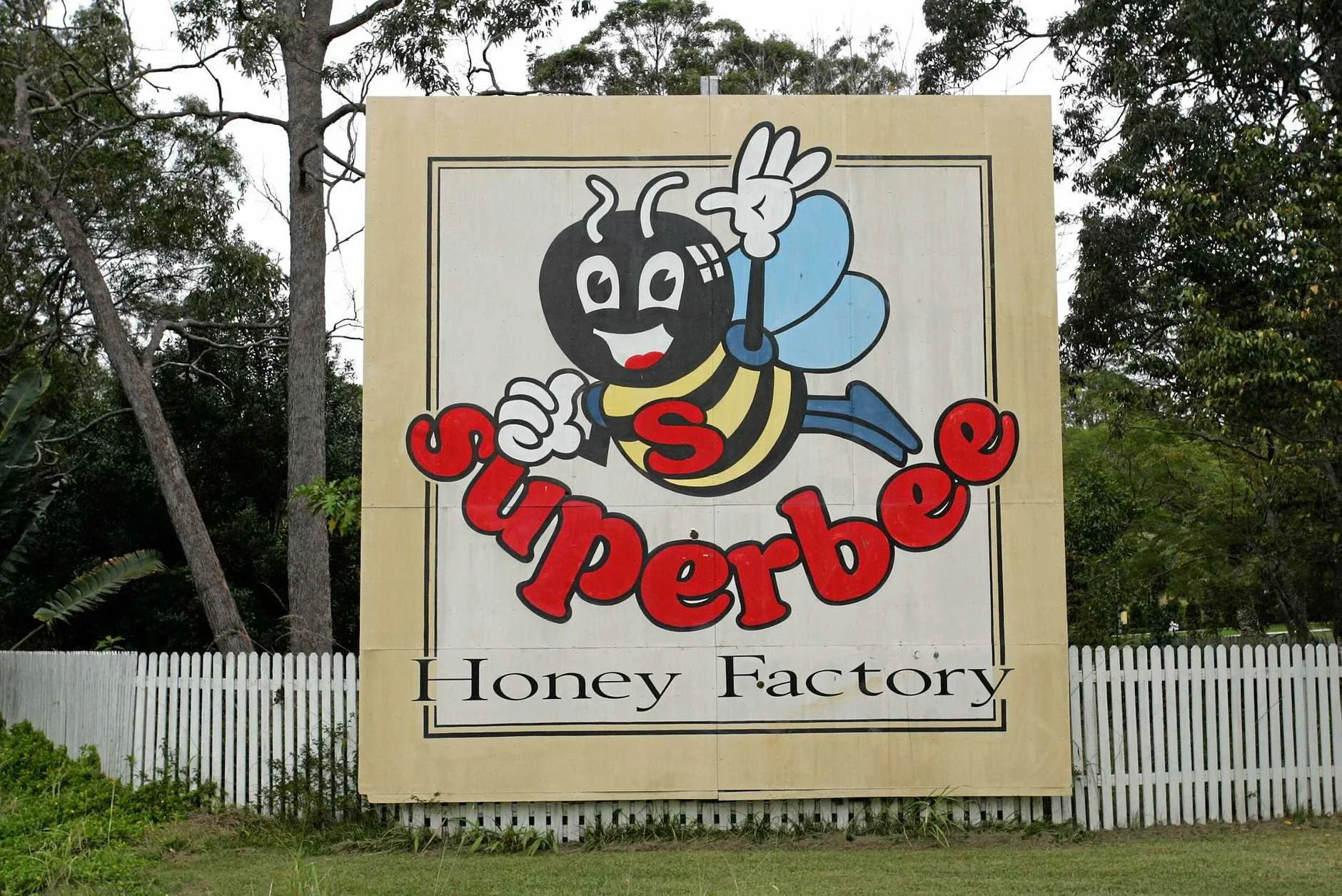
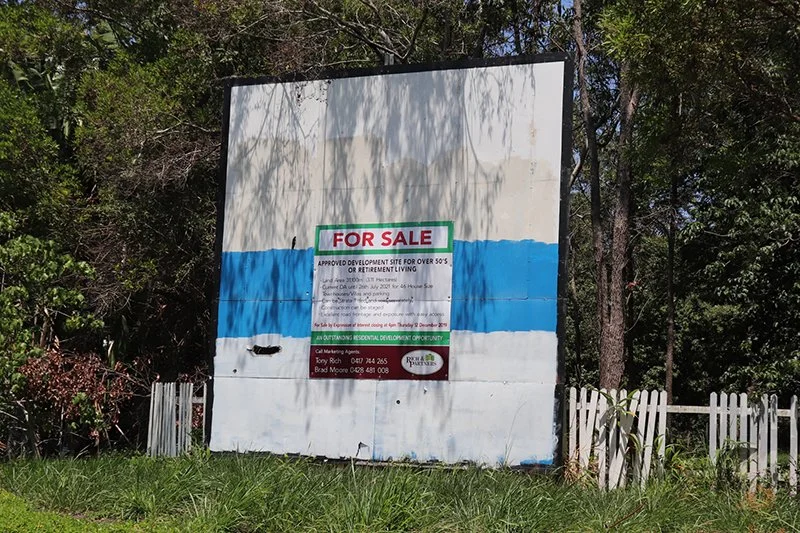
In the ten years I had lived on the Sunshine Coast, I had driven past this painted-over billboard countless times and never realised that it had once been the Superbee sign, with a much-loved attraction park hidden behind it.
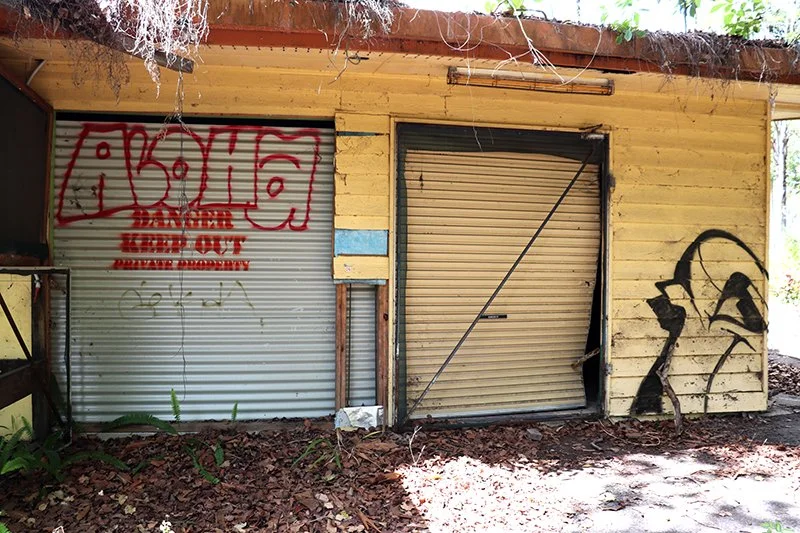
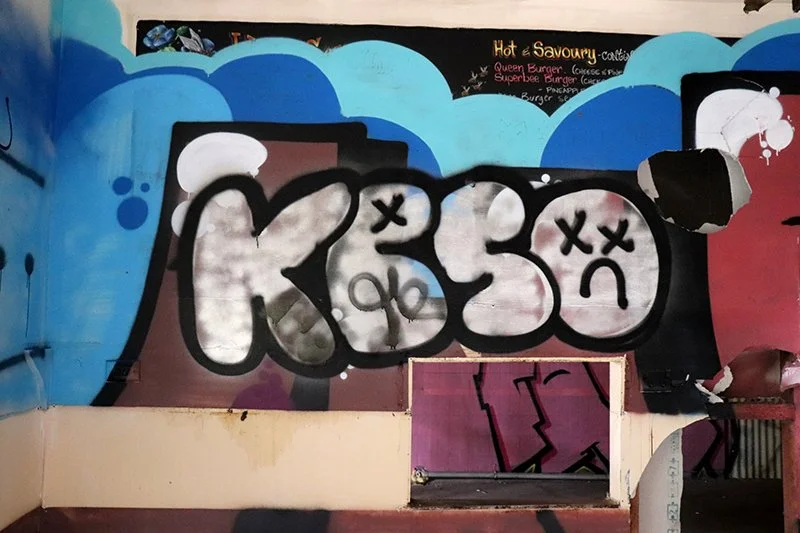
On my first visit, the site made my stomach turn. Everything was overgrown. Nearly all the windows were boarded up with corrugated iron. Graffiti covered every surface in countless styles and layers.
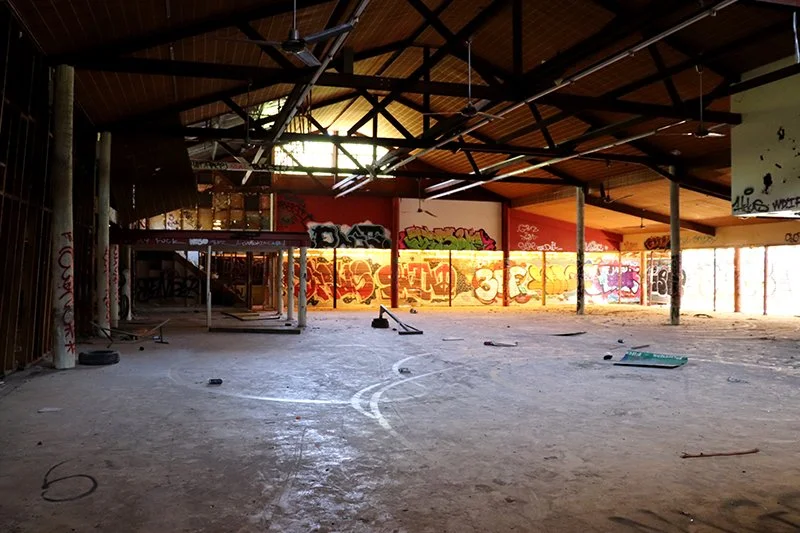
It was clear many people had passed through, leaving their mark. Through a small gap in a roller door, I found a way inside. What I discovered was not what I expected: dark spaces opening into vast rooms stripped of their former identity. Nothing referenced what the Superbee once was, except the faint edges of a blackboard menu hidden beneath paint.
What moved me was not the building's architecture but the architecture of the graffiti, the textures, drips, fades and compositions built up over time. The layers of human expression formed compositions that felt alive and constantly shifting. The building no longer told the story of honey production but instead held a new narrative of curiosity, creativity, destruction, and time passing.
From chaos to preservation
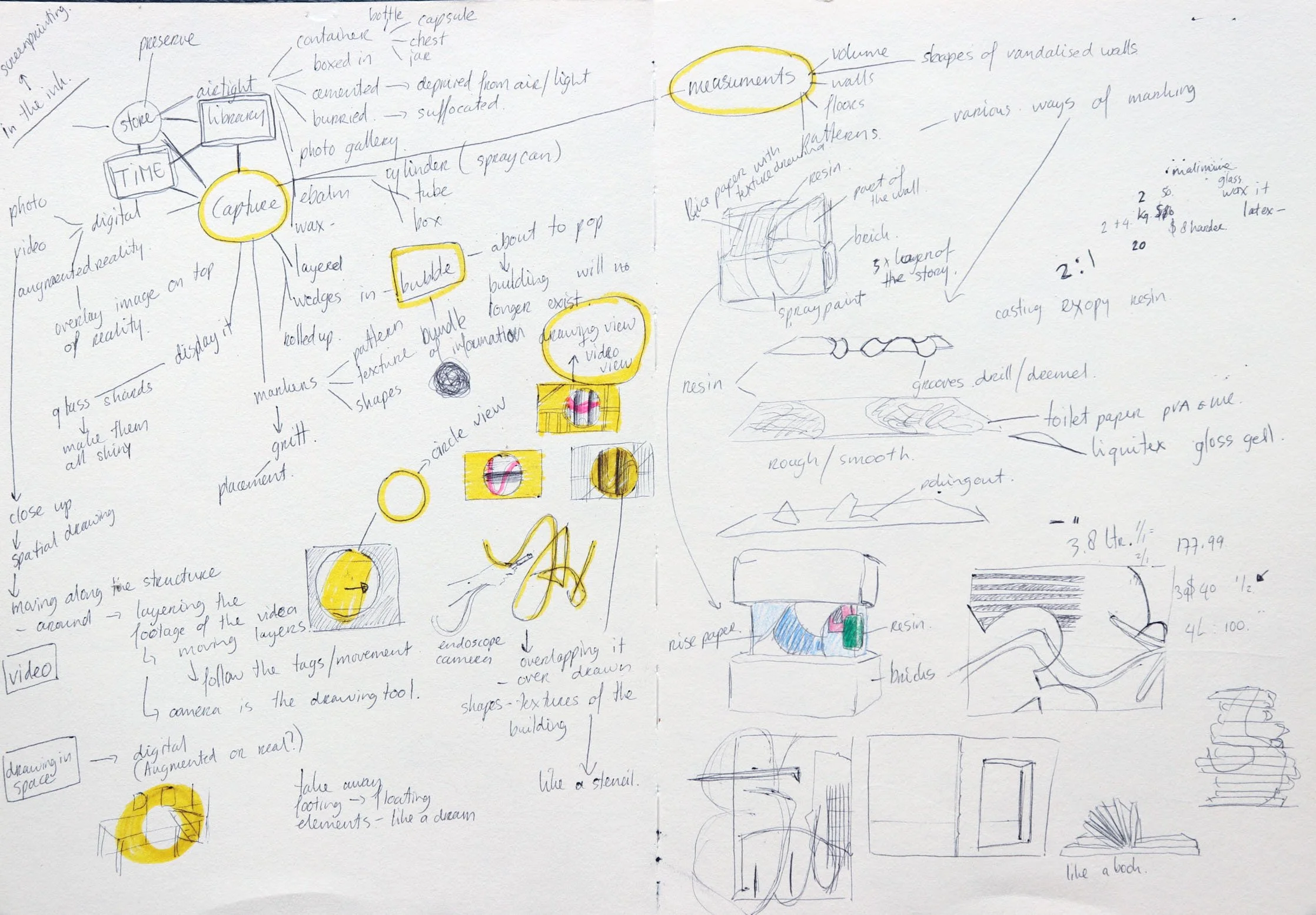
The destruction and layers of graffiti reflected ongoing human activity, even as the building was sealed shut. It acted as a time capsule, holding stories, memories, and traces of presence.
I began thinking about how we preserve knowledge in libraries: systems that organise, store and protect information. I wanted to do the same with these fragments of the site, capturing moments before they disappeared.
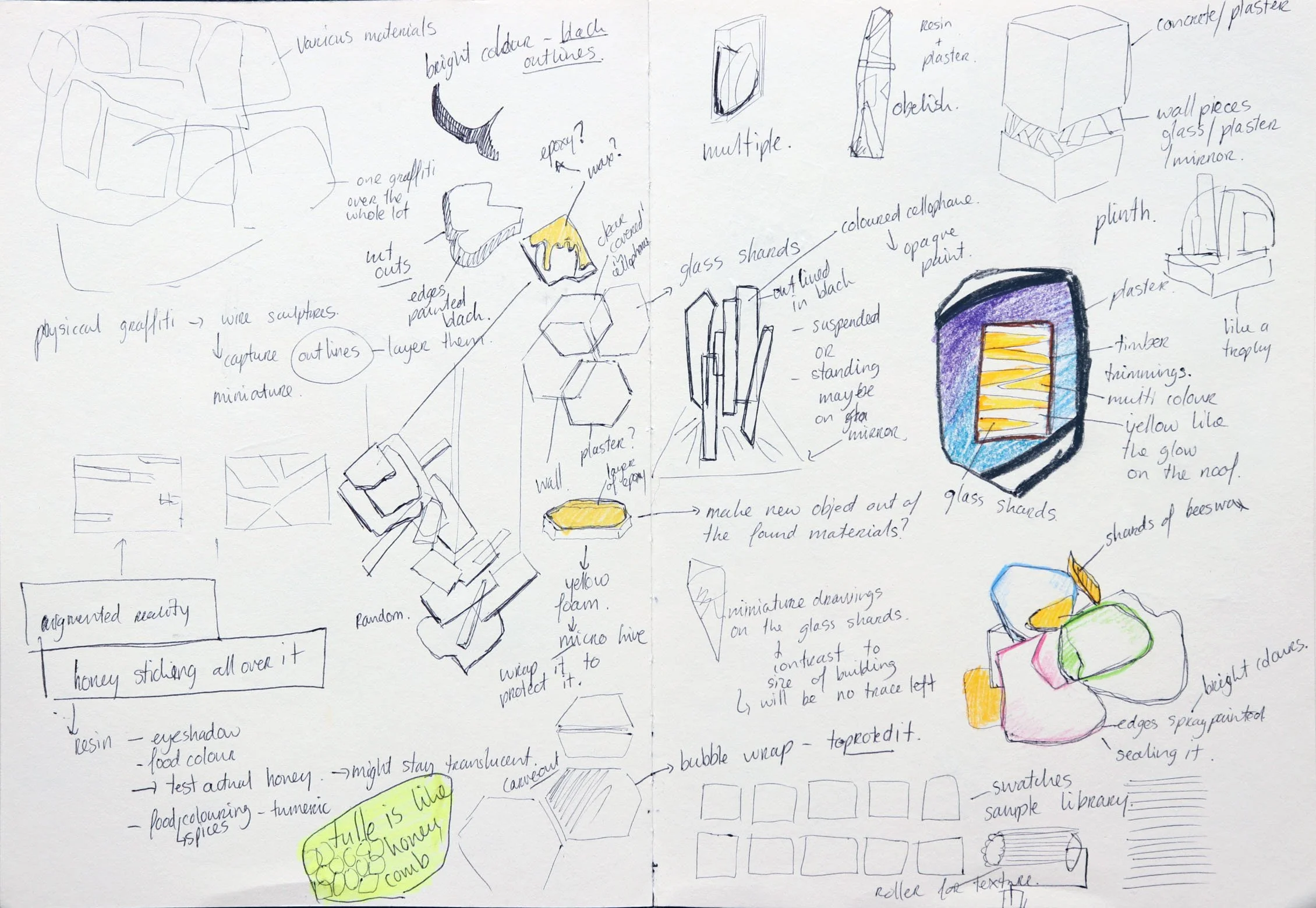
Rather than focusing on the building’s original function of producing honey, I shifted towards human activity itself. Yet I couldn’t unsee the hexagonal honeycomb patterns and the constant movement of a hive. The Superbee had once been a hive of activity, and even in abandonment, people continued to return and leave their marks. Like bees building layer upon layer, paint kept accumulating on the walls, but while bees are constructive, these human interactions were largely destructive. Through reconstruction, I wanted these stories to live on.
Testing and discovery
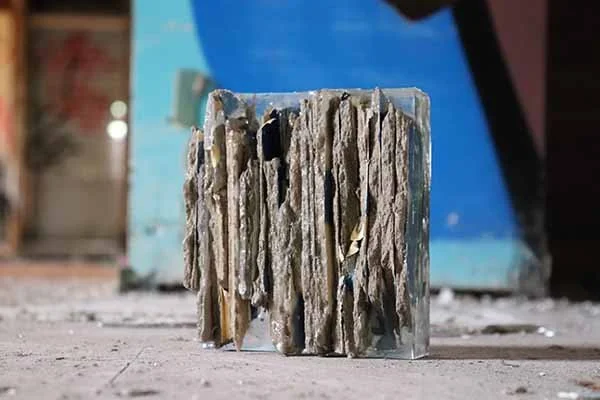
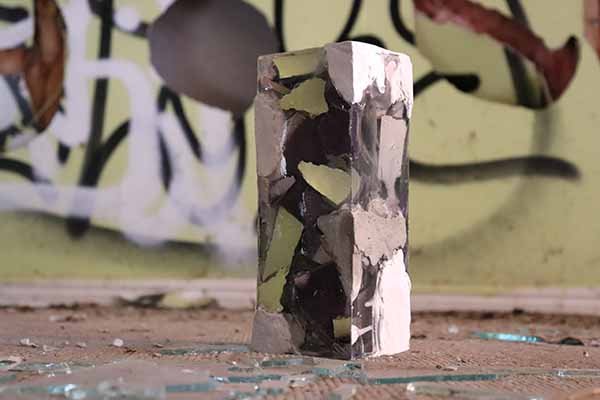
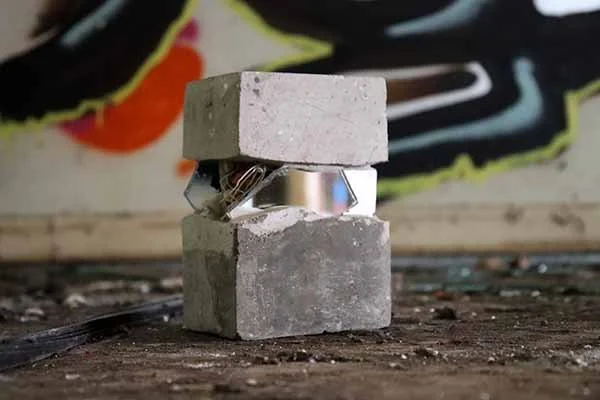
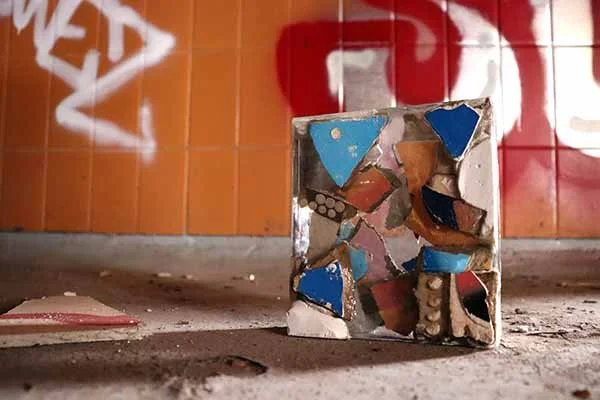
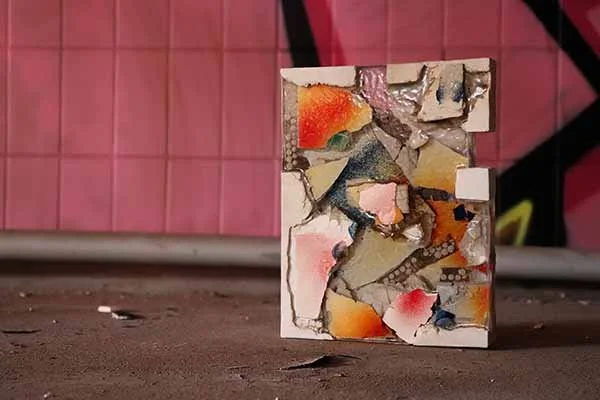
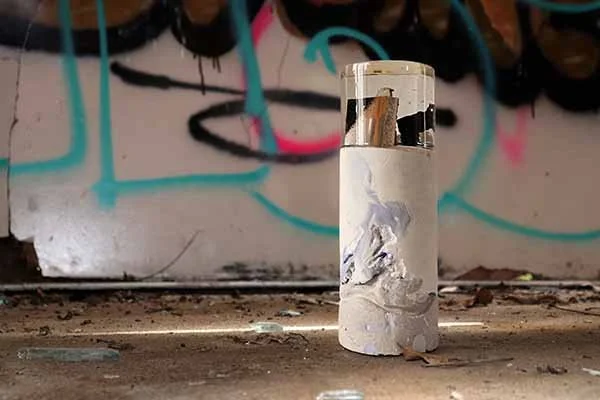
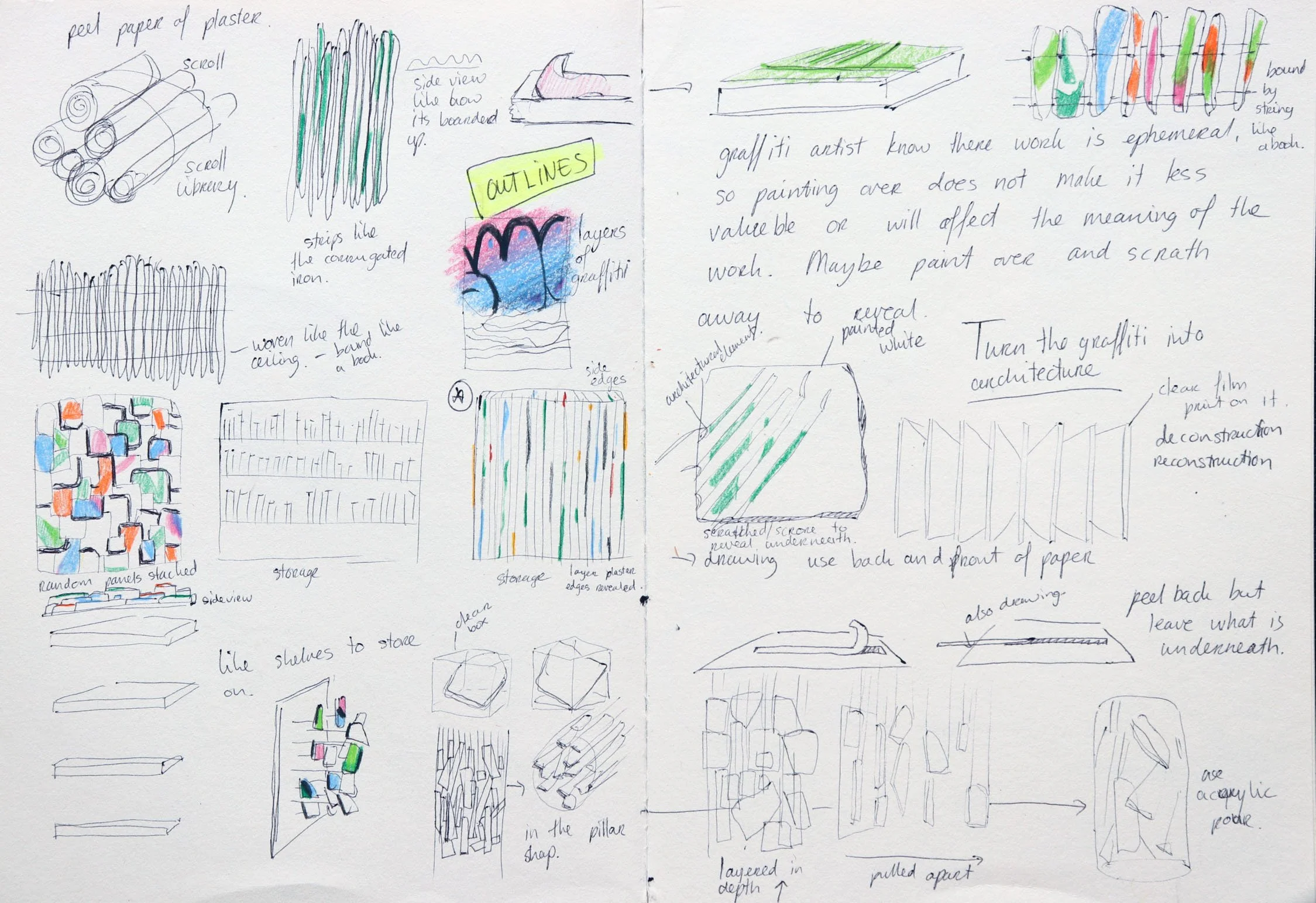
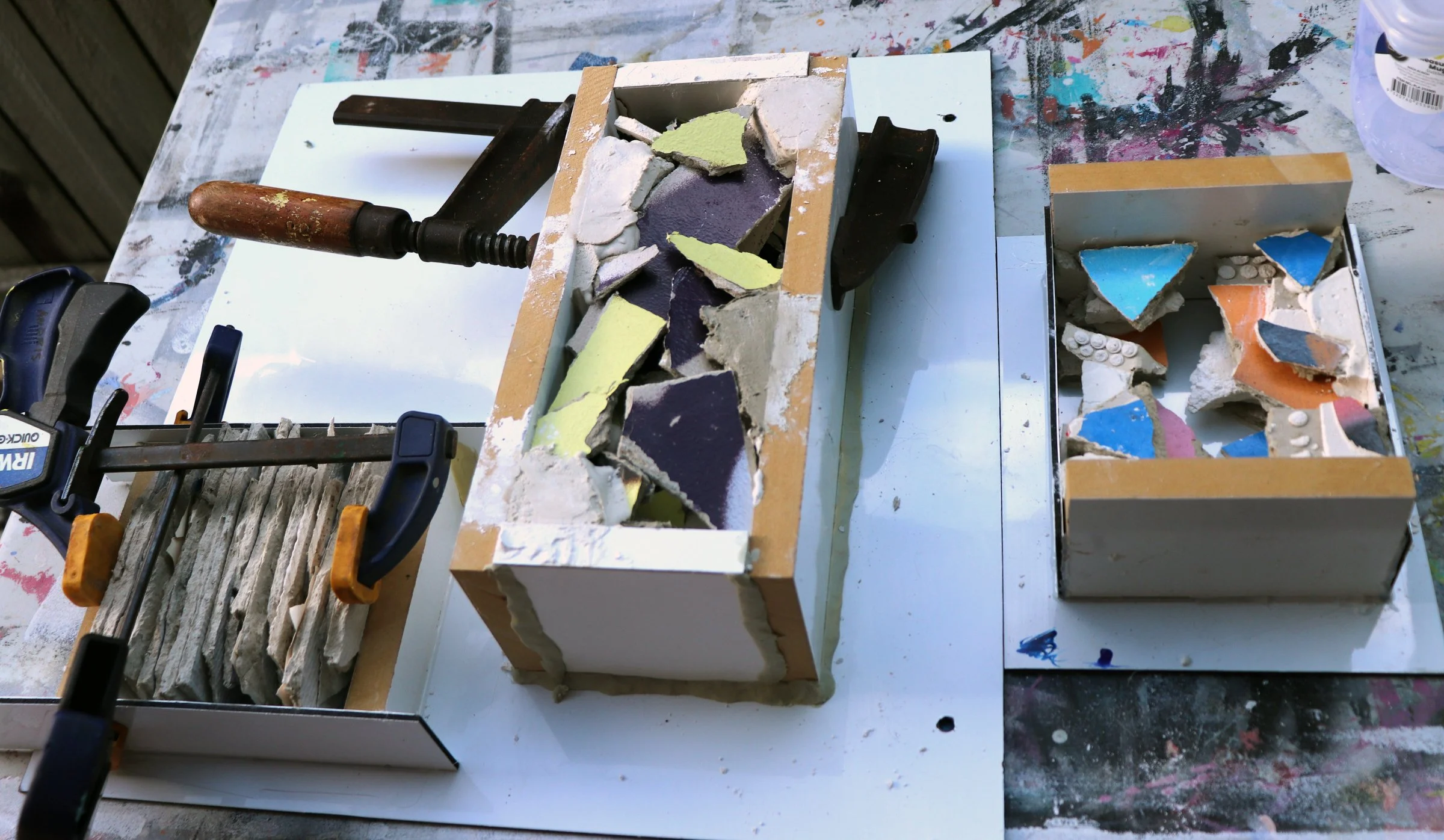
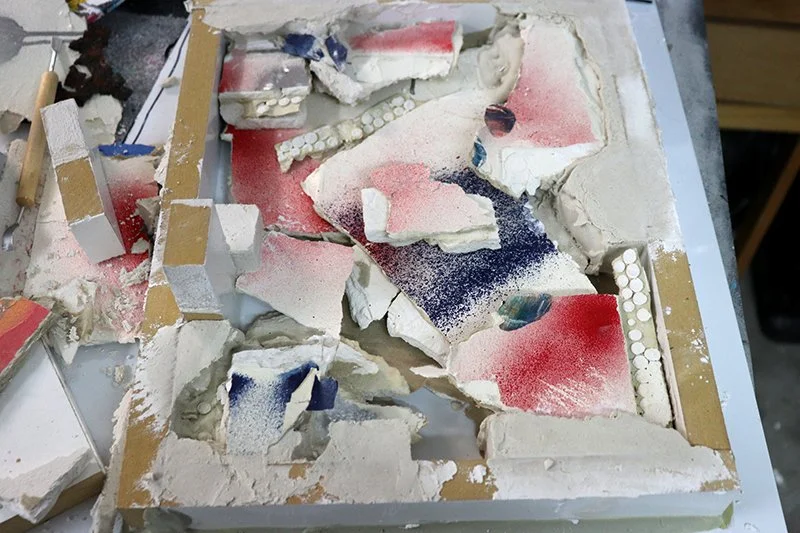
I collected wall fragments and materials bearing visible traces of human activity. I explored stacking, suspending, aligning, and casting these fragments, seeking a balance between transparency and structure. Resin proved the most appropriate medium, preserving materials while keeping them visible, much like insects trapped in amber.
Using plaster and cement alongside the resin referenced the original building materials, reinforcing the connection to the site. Rather than adding my own marks, I wanted the works to remain authentic, allowing the walls and materials to speak for themselves and carry their histories forward.
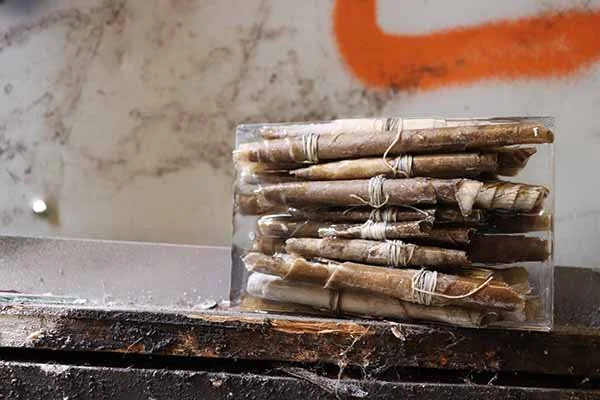
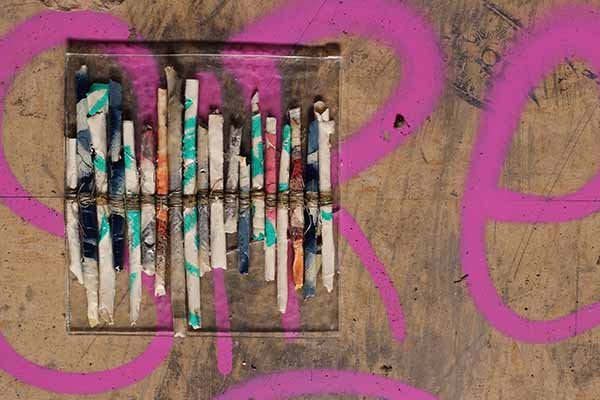
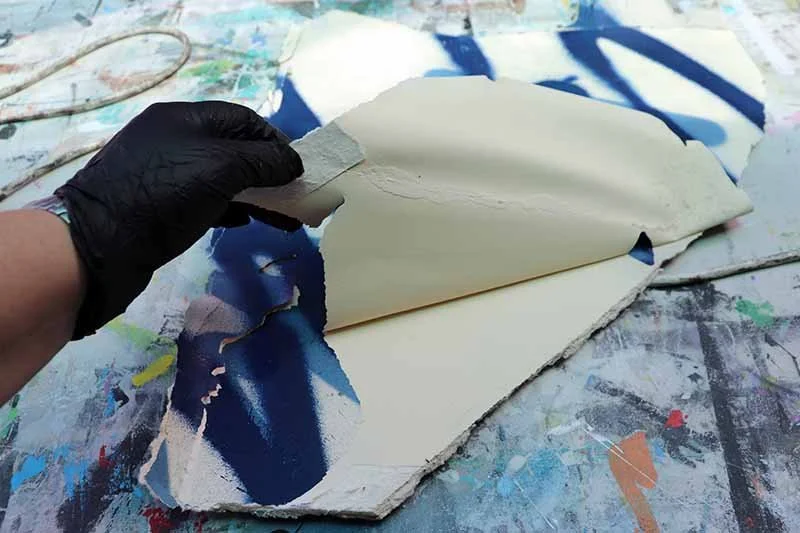
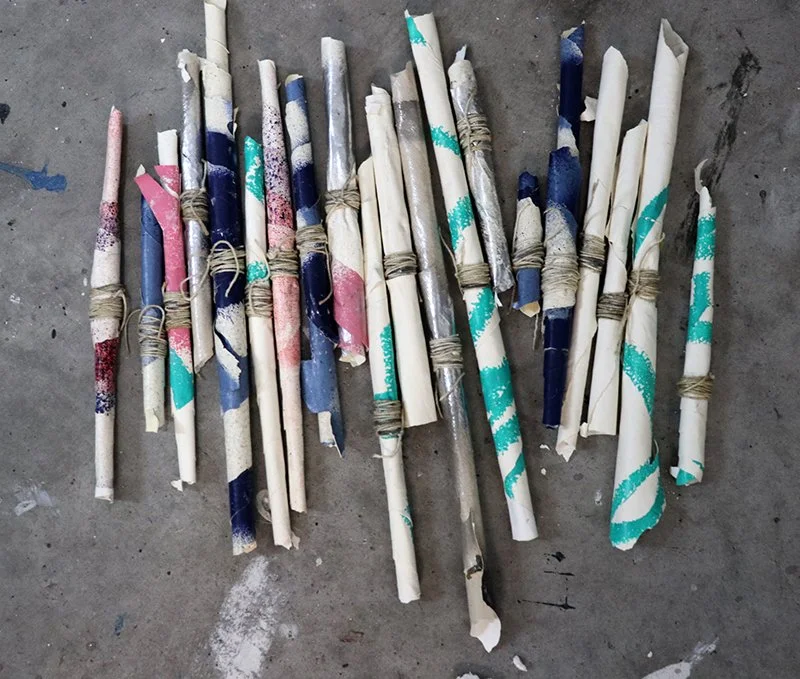
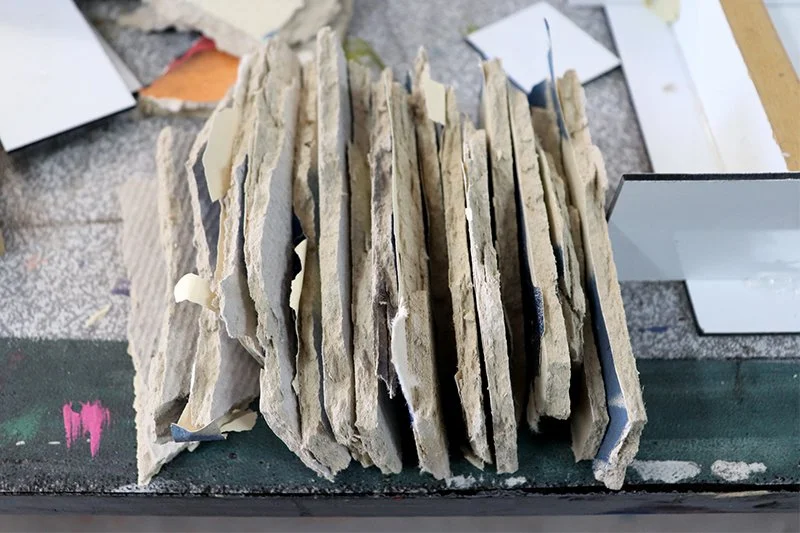
While experimenting, I discovered how to peel the paper from the back of plasterboard and roll the paint layer into scroll-like shapes. The scrolls immediately evoked archiving, ancient records, and preserved knowledge. They became vessels of memory, holding decades of human marks, textures, and colour. The idea of Wall Stories was born.

Making the sculptures
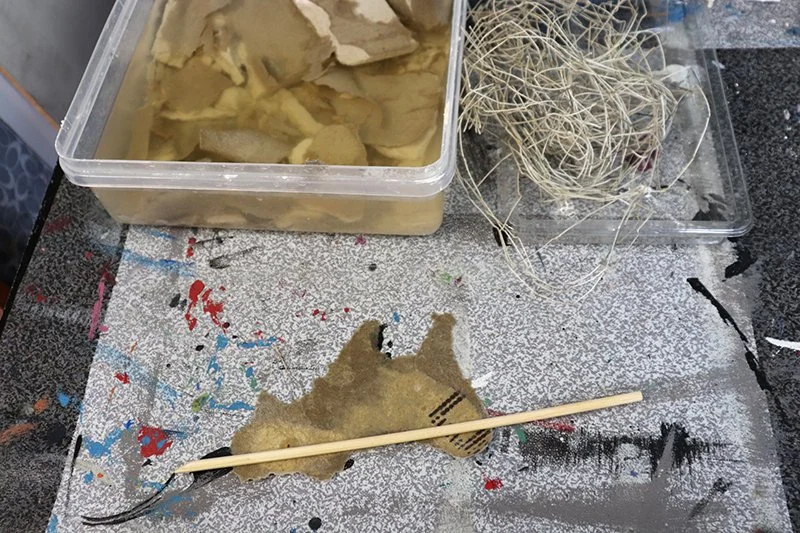
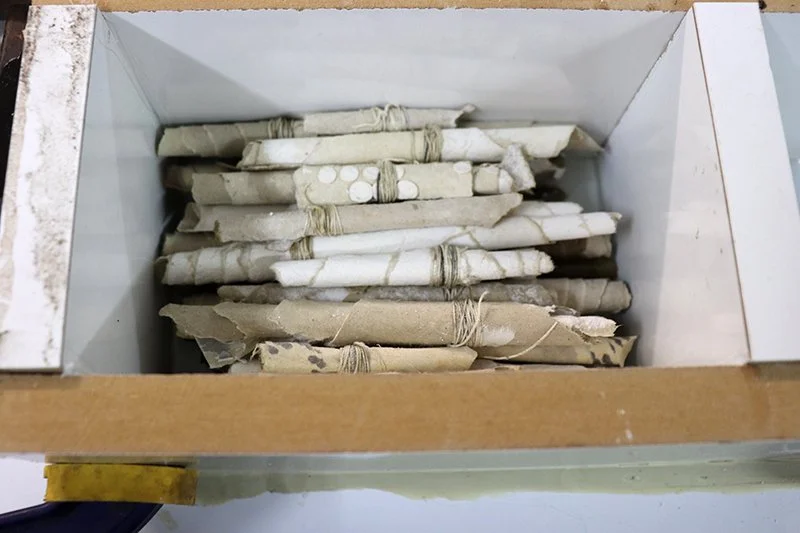
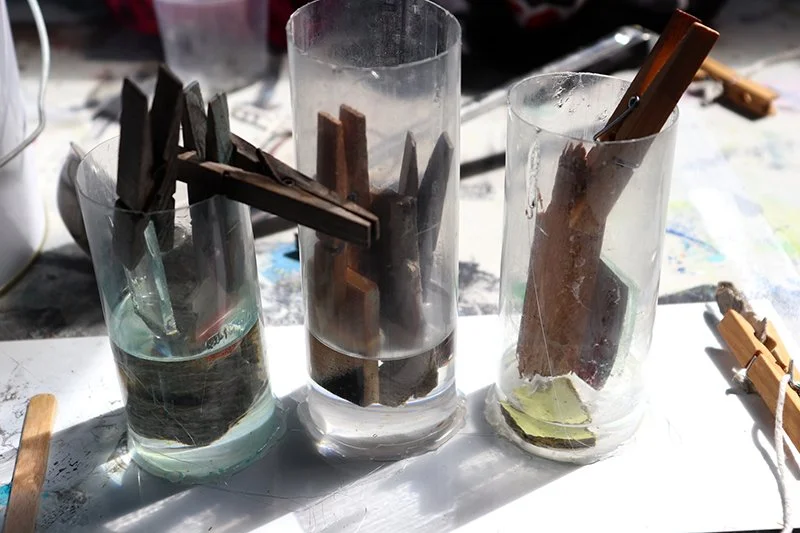
Each piece carries traces of construction, tourism, abandonment and vandalism, all preserved in resin. Some areas remain exposed so the textures can still be felt, preserving their authenticity.
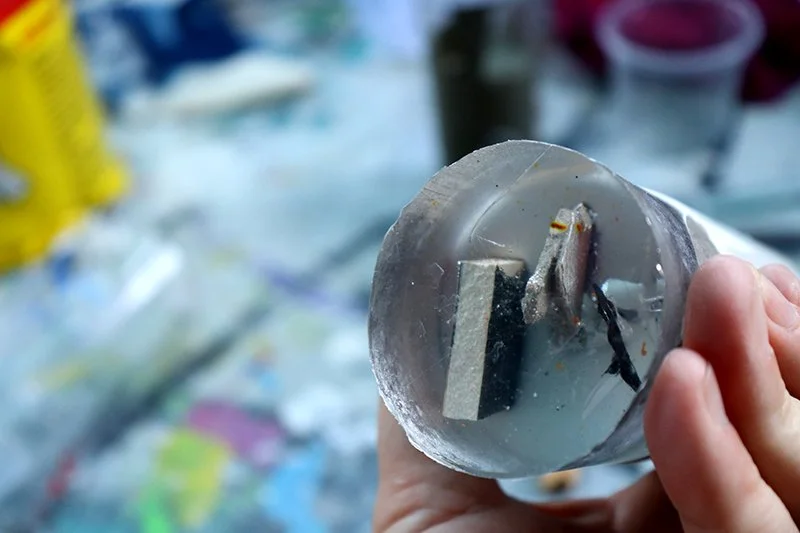
I worked carefully with colour, transparency and material to celebrate what the walls had witnessed rather than cover them with my own marks.
Holding onto what disappears
After completing the sculptures, I returned them to the site and installed them in front of the walls from which the materials were taken. This felt like closing a circle, with the preserved fragments standing in contrast to the crumbling surroundings. Soon after, the site burned down and was cleared for redevelopment. Today, these sculptures remain the only physical remnants of Superbee’s layered history. Wall Stories reflects on the human urge to leave marks, the fragility of places, and the urgency of preserving them before they disappear. By reconstructing chaos into order, the work transforms destruction into memory, allowing stories embedded in the walls to endure beyond the building itself.